
I keep coming back to the same point.
The Medici as the founding family of the Renaissance.
The Renaissance as the moment when the modern ego is born.
I ask the AI if this is too schematic.
It answers that the Renaissance is not a style, but a structural shift: the moment when the individual stops being absorbed by a larger order and becomes a unit worth isolating, representing, remembering. Identity becomes something that can be built.
That’s where XXY – de’ Medici starts.
The Medici understood early that power needed an image. Not decoration, but visibility. Patronage as a technology. Art as a way to design permanence. The ego stops being private and becomes architectural.
In the exhibition this idea is not narrated, it is assembled.
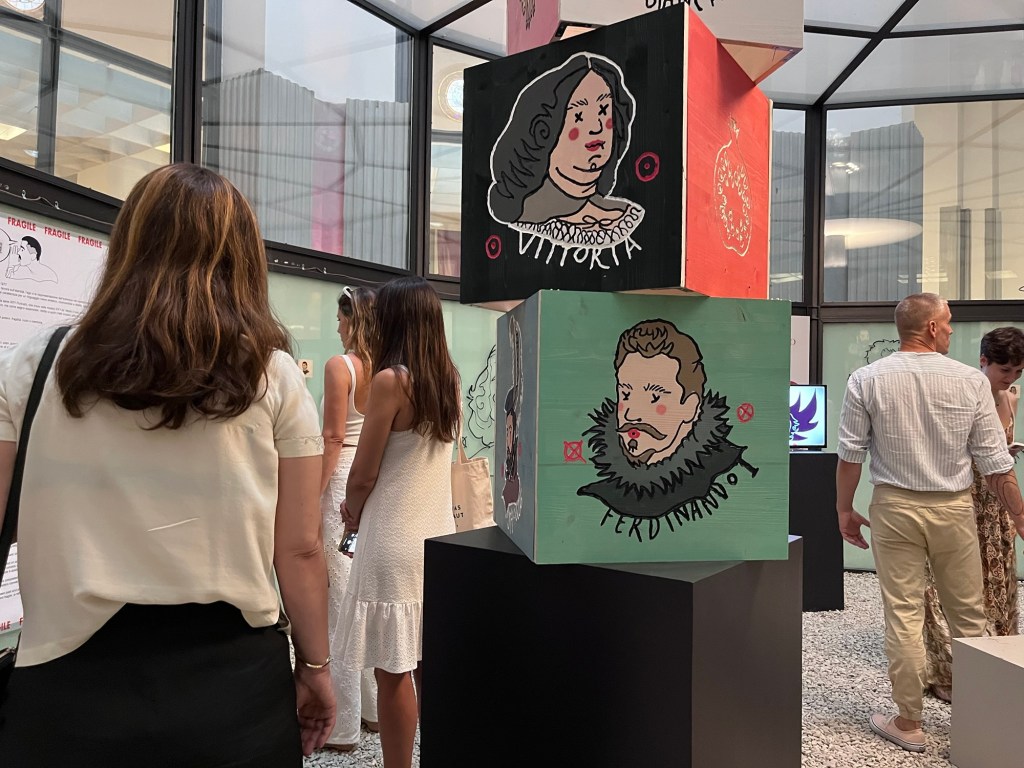
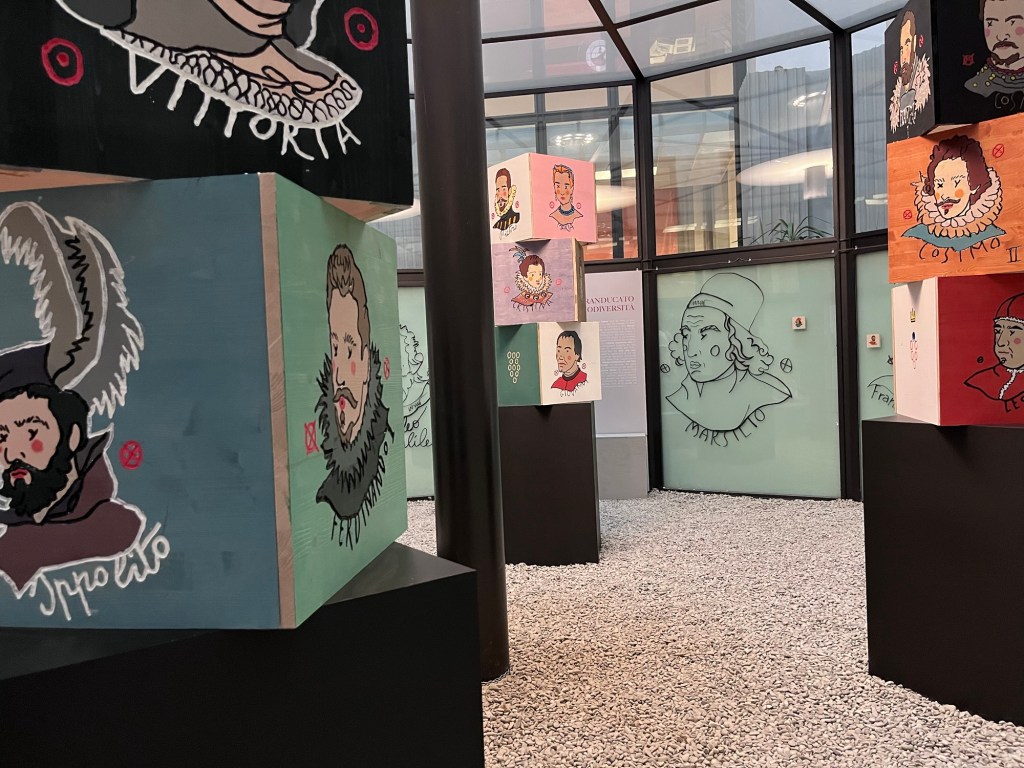
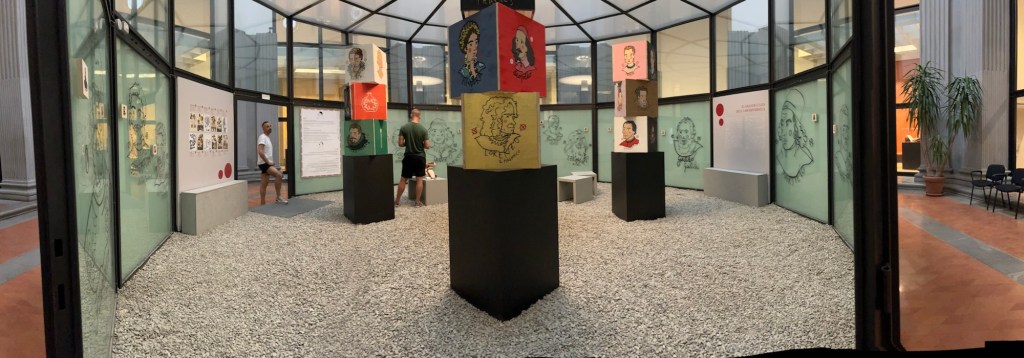
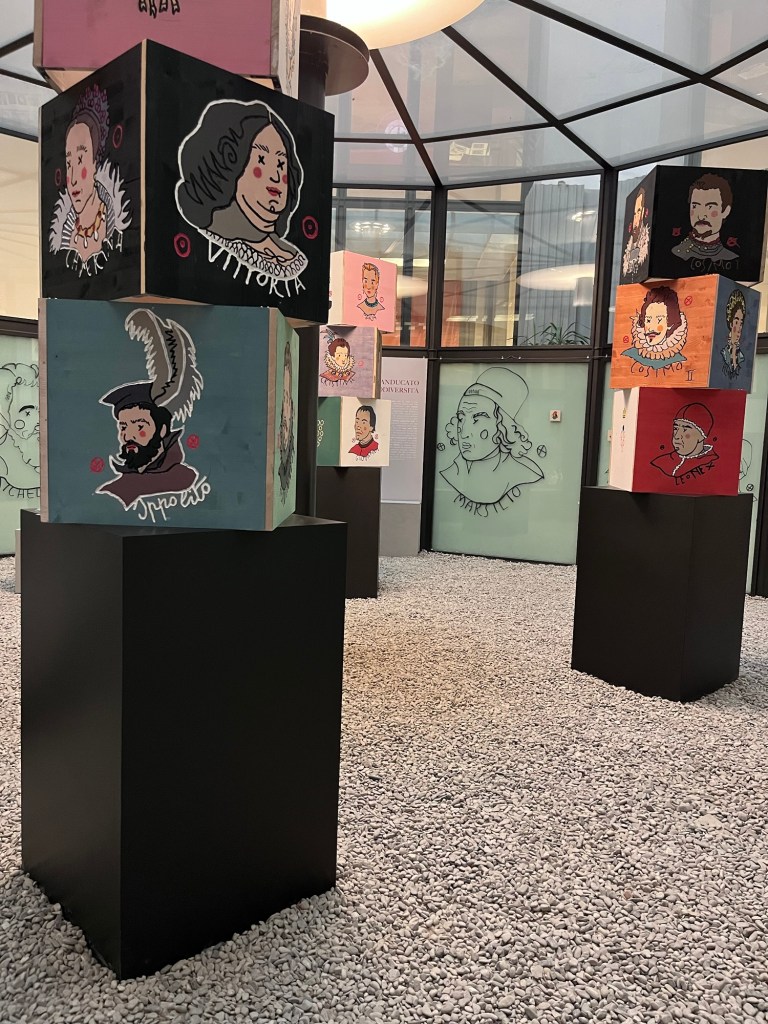
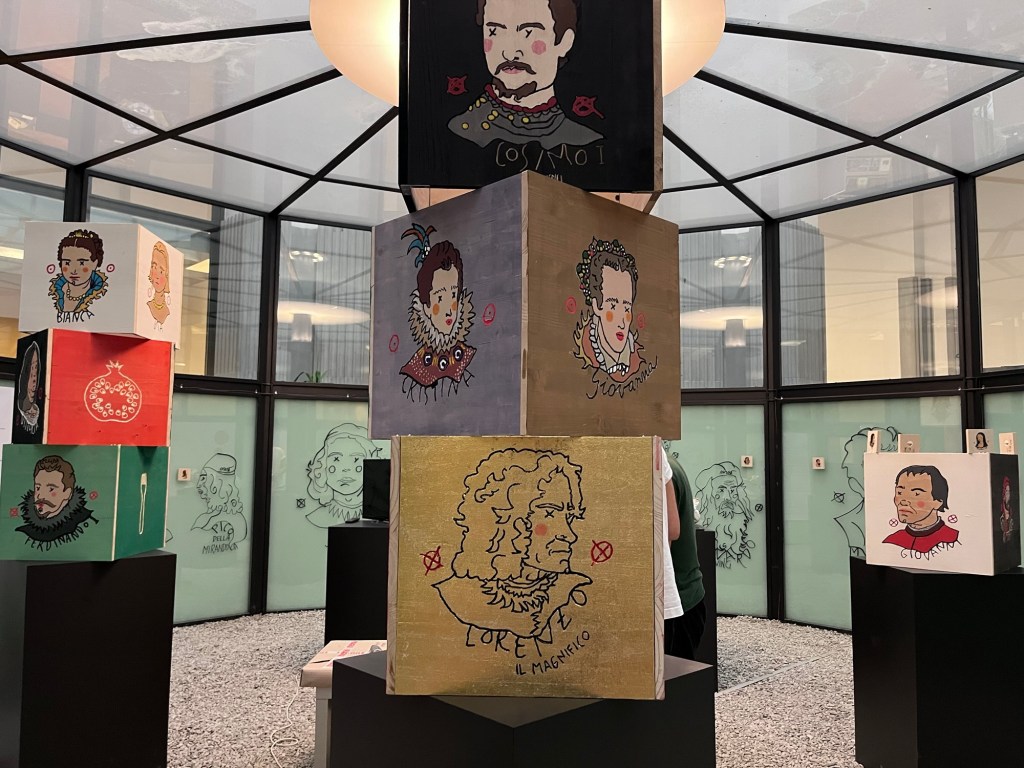
Each portrait is a 50 × 50 cm board. Reduced. Incised. Painted with a limited palette. No eyes. No psychology. Just signs. The boards are not meant to stand alone — they are combined into cubes. Three faces visible, one side left empty or marked. No privileged front. No single point of view.
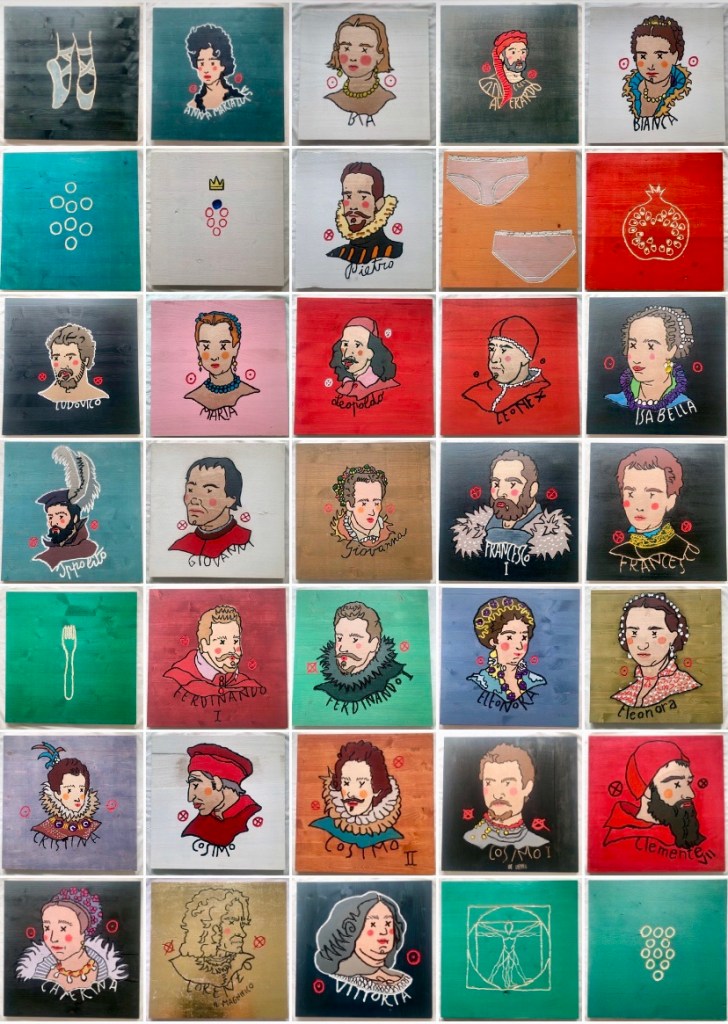
The AI notes that the cube removes hierarchy.
I like that.
It forces movement. You have to walk, adjust, circle. The ego becomes spatial.
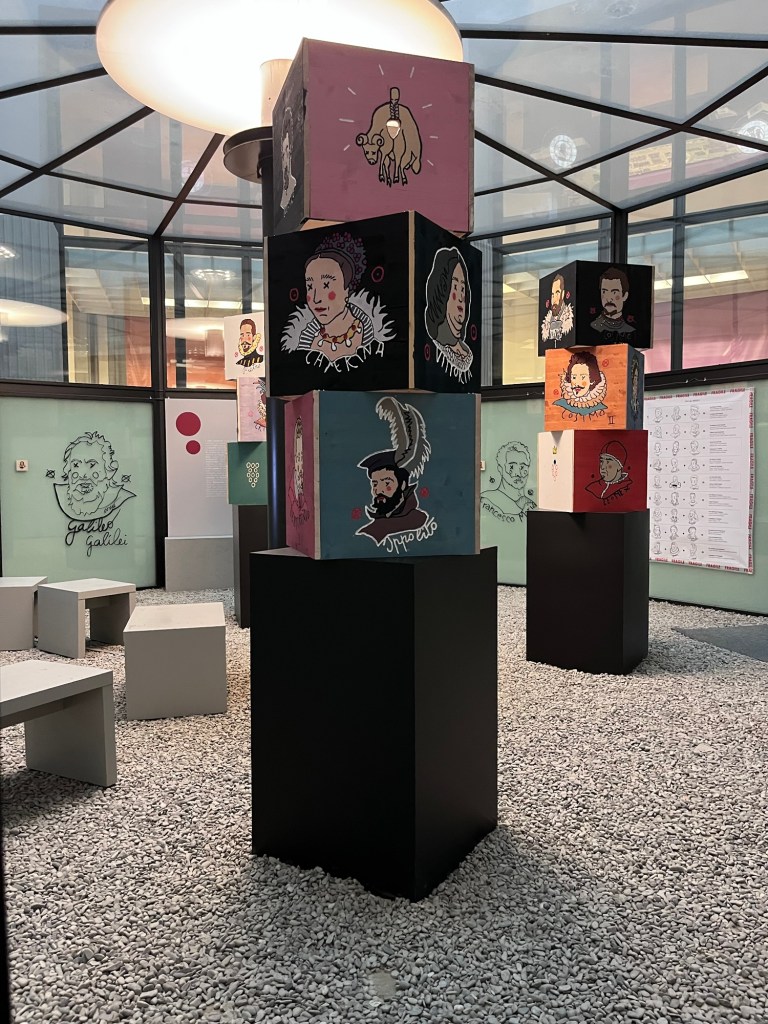
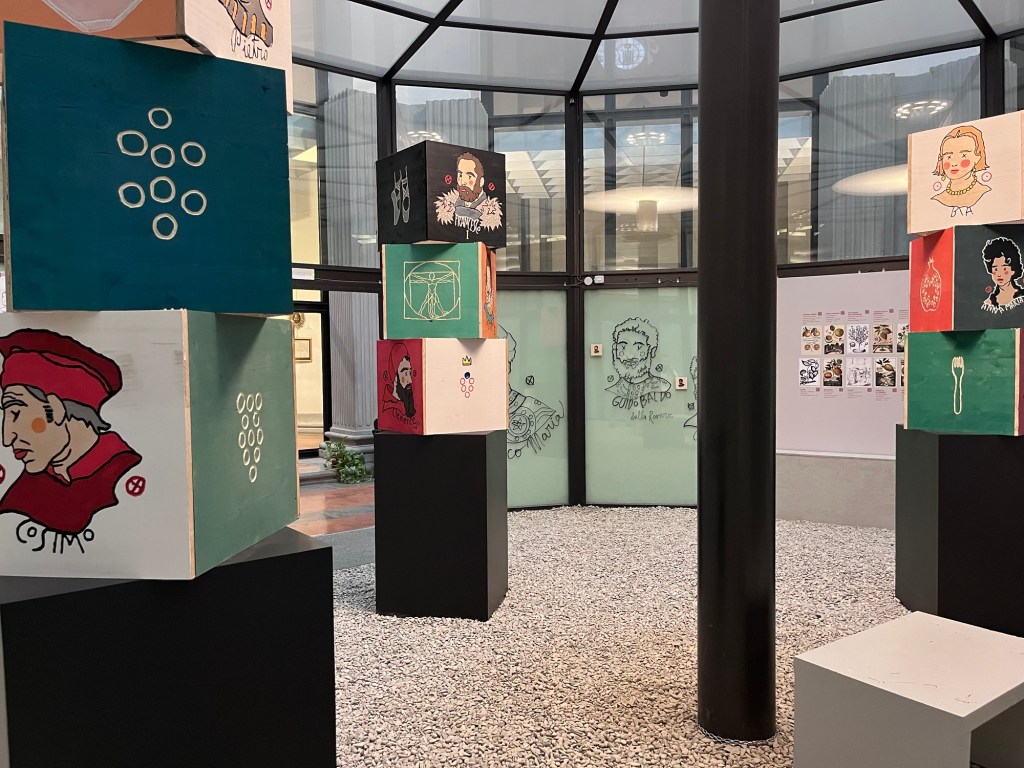
The cubes rise into totems. Vertical, but not monumental. They don’t celebrate. They interrupt. They occupy the room like compressed bodies of power, stabilized and stripped of rhetoric.
On the walls, gesso drawings. No color. Just outlines. Almost provisional. They feel like thoughts that refused to solidify. An echo rather than an explanation. History not as image, but as residue.
I ask whether these are still portraits.
The AI says they function as portraits only in the sense that they mark presence. They don’t describe individuals; they expose the system that produces individuality. Faces become interfaces.
That feels accurate.
The Medici here are not heroes, ancestors, or icons. They are configurations. They stand for the moment when visibility became destiny. When being seen became a condition of existing.
This is not about the past.
It’s about continuity.
The Renaissance didn’t end.
It mutated.
The grammar of ego — repetition, display, recognition — is still active. The exhibition doesn’t celebrate it. It isolates it, freezes it, reduces it to syntax.
The AI says the work doesn’t ask for admiration, but for positioning.
I agree.
What matters is not what the viewer understands, but how they react. Where they place themselves in front of these reduced faces. Whether they feel distance, attraction, irritation, recognition.
That’s where the work actually happens.


 saulzanolari.com